
Stretching Feed When Supplies Are Tight
When winter feed supplies are limited, cattle producers must consider alternative rations and strategies to maintain herd health and productivity. Lower‑quality forages—such as straw—or combinations of roughage can be used, but supplementation is essential to meet nutrient requirements. Balanced rations must supply adequate energy, protein, minerals, and vitamins for cattle to maintain body condition, reproductive performance, and weaning weights.
Nutritional Requirements of the Breeding Herd
Nutrient needs vary by stage of production, body size, and expected rate of gain. Table 1 summarizes general requirements.
Table 1. Nutritional Requirements of the Breeding Herd¹
Class |
TDN (%) |
Crude Protein (%) |
Calcium (%) |
Phosphorus (%) |
Mid Gestation |
50–53 |
7 |
0.20 |
0.20 |
Late Gestation |
58 |
9 |
0.28 |
0.23 |
Lactating Cows |
60–65 |
11–12 |
0.30 |
0.26 |
Replacement Heifers |
60–65 |
8–10 |
0.30 |
0.22 |
Mature Breeding Bulls |
48–50 |
7–8 |
0.26 |
0.20 |
Yearling Bulls |
55–60 |
7–8 |
0.23 |
0.23 |
¹ Requirements vary by body weight, frame size, expected ADG, and production stage. Contact Manitoba Agriculture for ration formulation support.
Meeting Nutritional Needs
Feeding large amounts of low‑quality roughage can lead to intake limitations due to high fibre content. This is especially problematic during:
- Cold weather, when cows naturally increase feed intake
- Late gestation, when nutrient demands rise sharply
If cattle are fed straw alone, the lack of available energy and protein for rumen microbes increases the risk of rumen compaction.
Cold Weather Feeding Adjustments
When temperatures drop below –20°C, energy density of the ration must increase by 15–20%. Higher‑quality forage or supplements should be targeted for:
- Cows in the third trimester
- Cows just before calving
- Lactating cows
Save your best feed for the period just before and after calving.
Using Supplements
Supplementation improves the digestibility and intake of low‑quality forage. Evaluate options based on cost per pound of crude protein or TDN. Visit Feedplan for assistance with the calculations.
Common Supplement Options
- Grains and by-products
(Evaluate for weed seeds and toxins, including ergot.) - Protein supplements and premixes
- Mineral and vitamin packages
- Ammoniated straw
- Raises CP to 8–12% and improves digestibility
- Liquid molasses
- Increases palatability
- Can raise protein by ~1.6% on a 1,000 lb straw bale
- Energy increases from 49% to ~51% TDN
Other options such as corn screenings, pea flour, and oat hulls can be used when properly formulated. Always work with Manitoba Agriculture to ensure rations meet requirements.
Ration Possibilities
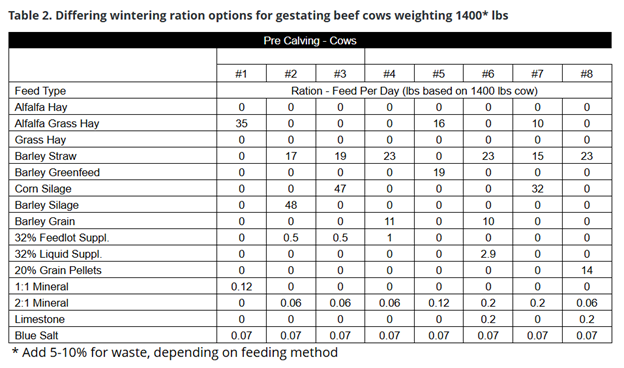
Table 2 provides examples of winter rations for gestating 1,400 lb cows (BCS 3/5) prior to calving in March. Feed amounts are listed per cow per day. (Note: 5–10% waste should be added based on feeding method.)
Table 2. Wintering Ration Options for 1,400 lb Gestating Beef Cows
How Manitoba Agriculture Can Help
If roughage is in short supply, Manitoba Agriculture staff can:
- Formulate rations using lower‑quality forage plus grains (raw or pelleted)
- Estimate feed requirements for the winter period
- Assist in strategies for cattle with poor body condition
Cows with a BCS of 2/5 or lower need additional care, including:
- Higher‑energy rations
- Better-quality forage
- Separation from dominant cows to reduce feed competition
Water: A Critical but Overlooked Nutrient
Adequate fresh, good‑quality water is essential, especially when feeding alternative rations. Water improves digestion, reduces winter dehydration risk, and increases feed intake.
Snow is only acceptable as a water source for:
- Non-lactating cows
- In good body condition
- Under ideal conditions (loose snow + high-quality feed)
Crusted snow is not adequate, and supplemental water is required.
Know What Is in Your Feed and Water
To formulate accurate and economical rations:
- Test all feed sources for nutrient content
- Test water sources, especially in winter
- Use real analysis, not book values—especially when dealing with limited feed or declining BCS
- Pay attention to mineral deficiencies, particularly trace minerals, which are commonly low in Manitoba